 Commercial Waste Addlestone: Recycling and Sustainability
Our Commercial Waste Addlestone page explains how local businesses can adopt an eco-friendly waste disposal strategy that supports a sustainable rubbish area across the borough. By combining efficient collections, on-site segregation and partnerships with reuse charities we aim to reduce landfill, improve recycling rates and support Addlestone's wider circular economy. This overview sets out our recycling percentage target, available transfer stations nearby, charity partnerships and our commitment to a low-carbon fleet of vans.
Why sustainable rubbish management matters in Addlestone is clear: lower disposal costs, lower carbon emissions and stronger community benefit. Our approach to commercial waste in Addlestone aligns with the borough's separation guidance — separating dry mixed recycling, food waste and garden waste where applicable — and it extends that discipline into workplaces, retail premises and construction sites. Practical measures include dedicated containers for paper and cardboard, glass, mixed plastics, food organics and textiles.
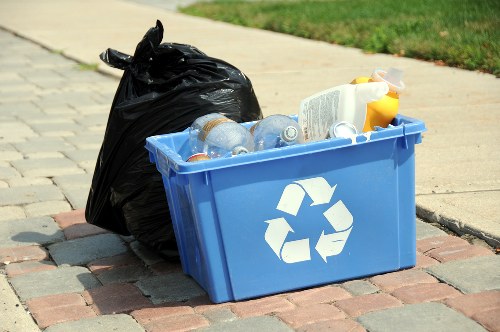 Commercial waste in Addlestone requires clarity on what goes where. To support this we provide clear labelling, staff training materials and waste audits to show how much material can be diverted from landfill. We also monitor progress internally and encourage clients to aim for higher recycling performance through minimisation, reuse and better segregation at source.
Recycling percentage target and performance roadmap
Our immediate target is a 65% recycling rate for commercial collections in Addlestone within 24 months, rising to a long-term goal of 75% by 2030. These targets reflect realistic improvements through better separation of paper, card and mixed containers, expanding food waste captures and diverting construction and demolition materials to approved reprocessing streams. We publish anonymised metrics to measure progress and ensure continuous improvement.Key actions to hit these targets include on-site segregation guidance, regular reporting and incentives for tenant and staff participation. We promote reuse-first approaches, such as repair or refurbishment of office furniture and redistribution of surplus consumables, rather than immediate disposal. For textiles and soft goods we work to divert usable items to community reuse networks.
 Local transfer stations and recycling destinations — efficient routing to the right facilities is essential for sustainable rubbish handling. We access nearby transfer facilities and sorting centres to keep collections local and reduce transport miles: these include the Runnymede-area transfer facility and other Surrey transfer stations that accept dry recyclables, bulky items and segregated organics. Using vetted transfer stations ensures materials go to licensed reprocessors and that residual waste is sent to energy recovery where appropriate.
Partnerships with charities and reuse organisations
We actively partner with both national and local charities to maximise reuse opportunities. Items suitable for redistribution are directed to community groups, furniture re-use charities and textile collection partners. Our partnerships include donation routes for:- Furniture and office equipment — re-used by community groups where safe and functional
- Textiles and clothing — directed to accredited collectors and local charity shops
- Food surplus — surplus edible food is made available to food banks and community fridges through established local schemes
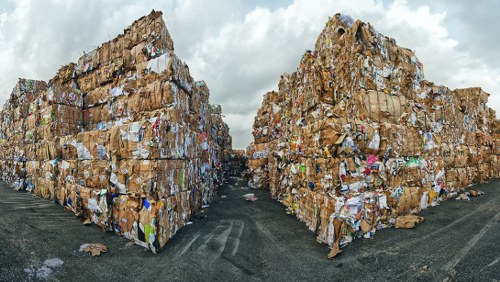 To maintain responsible reuse we track items and maintain documentation for high-value assets. These partnerships not only benefit the community but also reduce the embodied carbon of supply chains by extending product life.
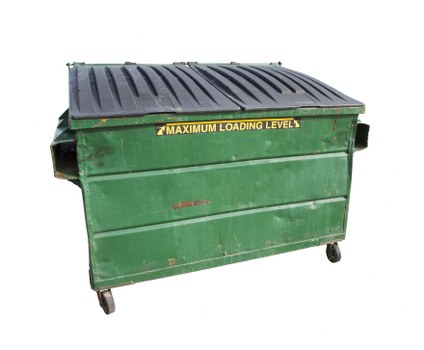 Low-carbon vans and low-emission operations are central to our sustainable service model. Our commercial waste fleet in Addlestone includes electric vans for urban collections, plug-in hybrids for longer runs and Euro 6 standard vehicles to minimise NOx and particulates. Route optimisation software reduces mileage and idling, and our drivers receive eco-driving training to cut fuel consumption and emissions.
We also offer bespoke services for sectors with specific needs, such as hospitality, healthcare and light industrial units, tailoring bin sizes and collection frequencies to reduce unnecessary vehicle movements. For construction and demolition projects we provide segregated skips for inert materials, wood, metals and masonry — materials that have strong recycling markets and can often be processed locally to reduce embodied travel emissions.
How businesses can get involved — practical steps any Addlestone business can take to contribute to a greener local waste system include:
- Introduce clear, labelled containers for different waste streams
- Set realistic internal recycling targets for each department
- Arrange periodic waste audits to identify reduction opportunities
- Engage with local charities to reuse furniture, textiles and surplus stock
- Choose a collection service that uses low-carbon vans and local transfer stations
Commercial Waste Addlestone is committed to creating an eco-friendly waste disposal network and a truly sustainable rubbish area for businesses. By combining measurable recycling percentage targets, trusted local transfer stations, charity partnerships and a low-emission fleet we deliver a practical pathway to higher recycling rates and lower carbon footprints for the whole borough. Working together, Addlestone's commercial community can build a resilient, circular local economy.
